You Deleted the App. The App Did Not Delete You.
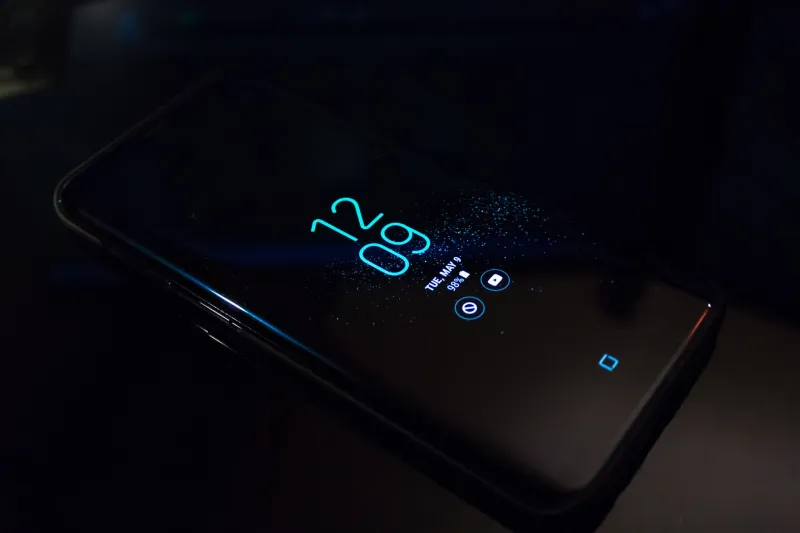
There's a specific kind of unease that comes from receiving a notification from an app you deleted six months ago. You stare at your lock screen. The icon is gone — you remember dragging it to the trash, watching it dissolve. And yet here it is, pinging you about a sale you don't care about from a service you no longer use. It feels less like a push notification and more like a knock on a door you bricked over.
This is not a glitch. This is architecture.
The Break That Wasn't
Most people assume deleting an app is the digital equivalent of cutting someone off. You remove the icon, you remove the relationship. Clean, final, done. But the systems underneath your phone's surface don't really work that way, and the companies that built those apps were counting on that misunderstanding from the start.
When you install an app, it registers what's called a push notification token with your device's operating system — Apple's APNs on iOS, Firebase Cloud Messaging on Android. That token is a persistent identifier. It links your device to the app's backend servers. And here's the part that should bother you: uninstalling the app doesn't automatically invalidate that token on the company's end. The server still has it. It's still pointing at your phone.
In a well-behaved system, the OS eventually signals to the app's servers that the token is dead — a delivery failure, a quiet tombstone. But "eventually" is doing a lot of heavy lifting in that sentence. The lag can be days. Sometimes weeks. And some companies, whether through negligence or deliberate design, don't clean up their token registries with any urgency at all.
Corporate Motivations Dressed as Technical Debt
Let's be honest about what's happening here. There are two explanations for why phantom notifications exist: incompetence and intent. Both are probably true at different companies, and they're not mutually exclusive.
The incompetence angle is real. Backend infrastructure at a lot of app companies is genuinely messy. Token cleanup is a low-priority task. Nobody's quarterly bonus depends on how quickly they purge dead device registrations. So it doesn't happen fast, and sometimes it doesn't happen at all.
But the intent angle deserves more scrutiny than it usually gets. Re-engagement is one of the most valuable levers in mobile product management. Getting a lapsed user to reinstall is dramatically cheaper than acquiring a new one. So if your notification lands on a phone where the app is gone, and the user taps it out of confusion or nostalgia and ends up back in the app store — that's a conversion. That's a win in someone's dashboard. The haunting, in other words, is sometimes the whole point.
Some platforms take this further through what's called "shadow notification infrastructure" — third-party SDKs embedded in apps that maintain their own contact channels independent of the primary app. You delete the app. The SDK's data broker relationships don't care. Your email address or phone number, captured during signup, gets routed through a separate pipeline entirely. The notification you receive isn't technically coming from the app at all. It's coming from a ghost of a ghost.
The Psychology of Being Paged by the Past
There's something genuinely disorienting about phantom notifications that goes beyond the technical explanation. It's the feeling of being monitored by something you thought you'd escaped. In a different context — say, a person showing up at your door after you'd ended a relationship — we'd have clear language for this. We'd call it a violation.
With apps, we tend to shrug. Maybe because the intruder is software. Maybe because we half-expect digital systems to behave badly by now. But the psychological texture of the experience is worth sitting with for a second. You made a deliberate choice to sever a connection. The system ignored that choice. And the system has more persistence than you do, because it doesn't forget and it doesn't get tired.
Users on Reddit threads and tech forums describe the experience with a consistent vocabulary: creepy, unsettling, "like being followed." One user on a popular privacy subreddit described getting a notification from a food delivery app two years after deletion — the app had since been acquired by a competitor, the original brand was essentially defunct, and yet something in the infrastructure still knew his phone number. Still wanted him back.
What Your Phone Actually Knows (And Doesn't Tell You)
Both iOS and Android have made moves toward better notification transparency in recent years. Apple's App Tracking Transparency framework and Android's evolving permission systems give users more visibility than they had in 2015. But these tools address data collection during use — they're less effective at untangling what happens in the aftermath of deletion.
On iOS, you can go into Settings and check which apps have notification permissions — but deleted apps don't appear there, because as far as your phone is concerned, they're gone. The problem lives on the server side, outside your device's jurisdiction. You have no dashboard for that. No toggle. No off switch you can reach.
Some privacy researchers recommend treating app deletion as the beginning of a process rather than the end of one. That means revoking permissions before deleting, submitting data deletion requests where applicable under laws like the CCPA if you're in California, and changing passwords associated with the account so backend re-authentication fails. It's a lot of steps for what most people experience as a simple drag-to-trash gesture.
Signals Without a Source
What makes phantom notifications feel so distinctly now is that they're a symptom of a broader condition: the infrastructure of digital life outlasts our participation in it. You close accounts, delete apps, change your habits — and the systems you touched keep humming. They keep logging. They keep reaching.
The notification that arrives from nowhere is just the moment that infrastructure becomes visible. Usually it operates in silence, beneath the surface of your device, in server farms you'll never see, maintained by companies you've already forgotten you gave your data to. The ping is almost a courtesy. At least you know, for a second, that it's still out there.
Somewhere in the void between your decision to leave and the system's refusal to let go, there's a notification in transit. It left a server in Virginia or Oregon or wherever the cloud physically lives. It's addressed to a version of you that doesn't use that app anymore. It doesn't know that. It doesn't care.
It just keeps sending.