Dead Pings: The Invisible Noise Haunting Every Phone in America
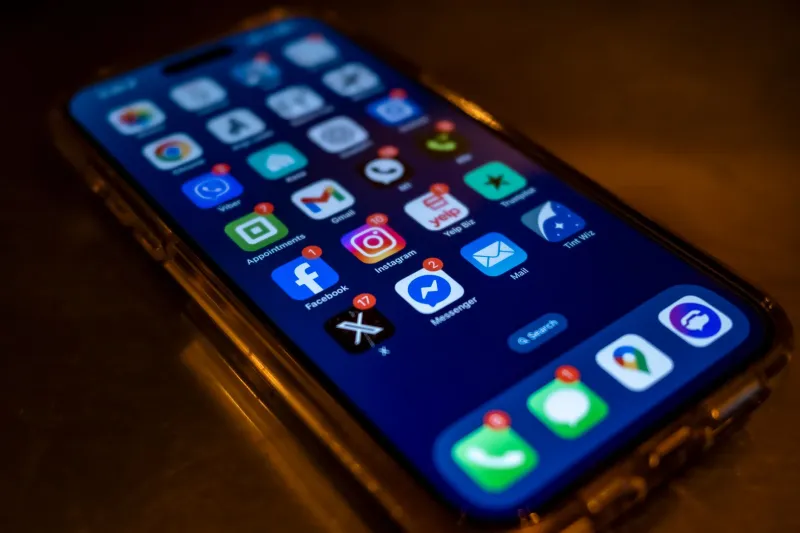
Open your phone's notification settings right now. Scroll all the way down. Past the apps you actually use. Past the ones you kind of use. Keep going.
At some point you're going to hit something you don't recognize. A service that rebranded. An app that got acquired and gutted. A retail chain that closed its last store in your state two years ago. And yet — somehow — it still has permission to reach into your pocket and tap you on the shoulder.
That's the graveyard. You've been living next to it this whole time.
The Archaeology of the Unread
Push notifications were supposed to be a gift. When Apple introduced them in 2009 with iOS 3, the pitch was intimacy — the idea that your phone could whisper something relevant to you at exactly the right moment. It felt almost magical. A little red badge. A chime. Someone wants your attention.
What nobody planned for was entropy.
Over the course of a typical American smartphone lifespan — roughly two to four years before an upgrade — the average user accumulates notification permissions from somewhere between 40 and 80 apps, according to estimates from mobile analytics researchers. But app usage follows a brutal Pareto distribution. Most people actively engage with fewer than a dozen apps on any given day. Everything else becomes sediment.
"We called it notification debt internally," says one former product manager at a mid-sized e-commerce app, who asked not to be named because they still work in the industry. "You'd send a push, watch the open rate crater over time, and know that most of those pings were landing in a void. But the permission was still live. The infrastructure was still firing."
That infrastructure doesn't just quietly fail. It keeps transmitting.
Signal Without Meaning
Here's the strange part: you don't have to consciously read a notification for it to affect you.
Researchers studying attentional fragmentation — the way constant interruptions erode sustained focus — have found that even suppressed or glanced-at notifications carry a cognitive toll. A 2015 study out of Florida State University suggested that simply receiving a phone notification, without ever interacting with it, produced distraction levels comparable to actually answering a call. The brain registers the signal. It can't fully ignore the tap on the shoulder, even when the shoulder belongs to a dead app.
Scroll back to that graveyard in your settings. Every one of those ghost services still has a live wire running to your nervous system.
"There's this concept in acoustics called masking," explains a UX researcher who has spent the last several years studying notification design patterns. "Loud sounds make it harder to hear quieter ones. We think something similar happens cognitively with notifications. When you have dozens of low-value pings competing for attention, the high-value ones get masked. You start tuning everything out — including the stuff that actually matters."
The result is a kind of learned numbness. A generation of Americans has been trained, largely by abandoned apps and defunct services, to treat their own phones as background radiation.
The Developers Who Couldn't Let Go
On the other side of this equation, there are engineers and product teams who never got the memo — or never sent it.
When an app shuts down, the graceful move is to send a final notification, revoke permissions, and sunset the push infrastructure. A clean death. In practice, it almost never happens that cleanly. Acquisitions leave zombie codebases running on someone else's servers. Startups dissolve without a formal wind-down. Subscription apps lapse into maintenance mode, still technically operational, still technically pinging, but with nobody home to curate what gets sent.
"I found a notification system for an app I'd worked on in 2017 that was still sending weekly digests in 2022," says one indie developer who builds productivity tools. "Nobody had turned it off. The database still had 30,000 registered device tokens. It was just... out there. Pinging into the dark."
Thirty thousand devices. Thirty thousand people receiving a message from something that had, for all practical purposes, ceased to exist. If that sounds like a ghost story, it's because it basically is.
The Phantom Architecture
What makes this especially strange is the infrastructure holding it all together. Apple's APNs (Apple Push Notification service) and Google's Firebase Cloud Messaging are enormous, resilient systems designed to deliver messages at scale with high reliability. They are, in a very real sense, optimized for persistence.
They don't know if the app on the other end is alive or dead. They don't care. A device token is a device token. A message is a message. The pipes just move the water.
This creates a situation where the most technically sophisticated communication infrastructure ever built is routinely being used to deliver messages that no living human being intended to send, to audiences that no longer remember opting in, on behalf of products that no longer exist.
It's the digital equivalent of getting mail addressed to someone who moved out of your apartment four years ago. Except it happens six times a day. Except it's been quietly shaping your relationship with interruption and attention since the day you first unlocked a smartphone.
What Gets Left Behind
There's a certain kind of digital archaeologist — and MPAEGM has crossed paths with a few — who finds this less depressing than fascinating. The accumulated notification permissions on a five-year-old phone are, in a weird way, a stratigraphic record. Layer by layer, you can read someone's life: the fitness kick in 2020, the food delivery apps that bloomed and died during lockdown, the news aggregator they stopped trusting, the dating app they quietly abandoned.
Each permission is a timestamp. Each dead ping is a fossil.
"Your notification tray is basically a diary you never meant to keep," one digital archivist told us. "It documents everywhere you've been, everything you tried, everything you gave up on. And most people have never looked at it that way."
Most people have never looked at it at all.
The Frequency You Can't Tune Out
So what do we do with this? Auditing your notifications — actually sitting down and revoking permissions from the dead and the dormant — takes maybe twenty minutes and has a measurable effect on focus and phone anxiety. Studies on digital minimalism consistently find that reducing notification noise improves sustained attention and lowers baseline stress. The fix is simple.
And yet most of us won't do it. Partly because it's tedious. Partly because we don't think of notifications as something that requires maintenance. Partly because we've been so thoroughly numbed to the noise that we don't fully register it as noise anymore.
The graveyard is quiet enough to ignore. That's exactly what makes it dangerous.
Somewhere right now, a server in a data center is firing a push notification for an app that hasn't had an active user in three years. The message is traveling through real infrastructure, arriving on a real device, registering somewhere in a real person's peripheral awareness before they swipe it away without reading it.
The app is dead. The ping lives on.
Signals from the void, same as always.