You Didn't Find the Rabbit Hole. The Rabbit Hole Found You.

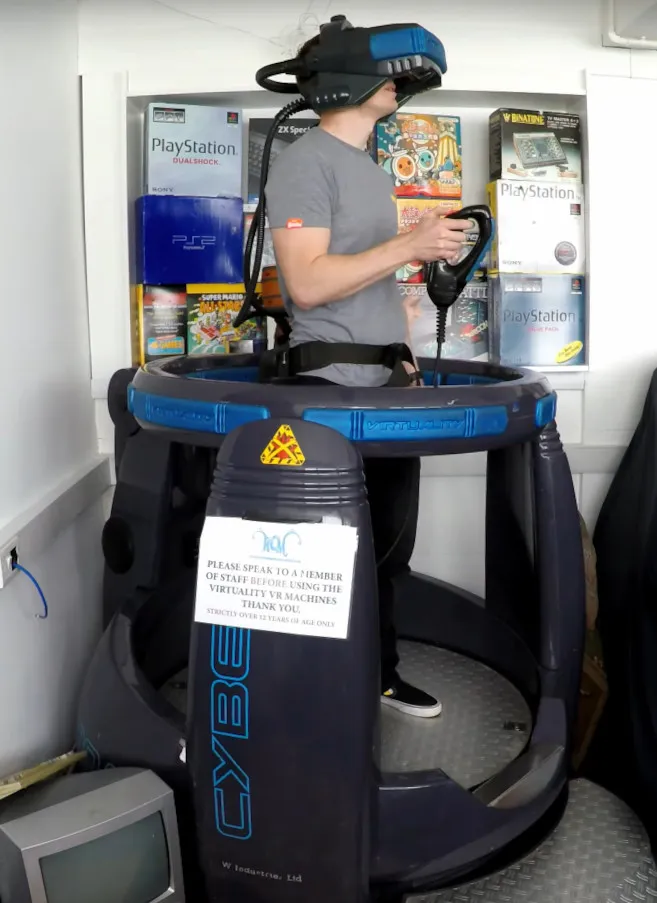
Photo: Giles Laurent, CC BY-SA 4.0, via Wikimedia Commons
Let me paint you a picture you've probably lived.
It's 11 p.m. on a Tuesday. You open YouTube to watch one video — something mundane, maybe a recipe or a highlight reel. An hour and a half later, you're watching a 47-minute documentary about a minor Cold War incident you'd never heard of, produced by a channel with 12,000 subscribers, and you feel weirdly satisfied about it. You didn't go looking for that video. It materialized in front of you, one autoplay at a time, like a trail of breadcrumbs laid by something that knew exactly where you were going before you did.
That feeling — that specific mixture of discovery, depth, and slight disorientation — is not an accident. It's a product. And MPAEGM exists precisely in the space where that product gets interesting.
The Architecture of Drift
Every major content platform operating today runs on some version of a recommendation engine. The specifics vary — YouTube's algorithm is different from TikTok's For You Page, which is different from Spotify's Discover Weekly — but the underlying logic is consistent: the system watches what you engage with, builds a probabilistic model of your tastes, and serves you content calibrated to keep you engaged slightly longer than you planned.
"Slightly longer" is the key phrase. These systems aren't optimizing for a single session. They're optimizing for a relationship. Each interaction teaches the algorithm something new about you, refining the model, narrowing the beam. Over time, what started as a general interest in, say, true crime podcasts becomes a hyper-specific appetite for unsolved cases from the 1970s in rural Appalachia. You didn't consciously decide to go that niche. You drifted there, and the algorithm followed your drift — and then, quietly, started leading it.
This is what researchers sometimes call preference amplification. The algorithm doesn't just reflect your interests. It gradually intensifies them, pushing you toward the edges of whatever niche you're in, because edge content tends to generate stronger engagement signals. The more obscure, the more emotionally charged, the more the content feels like it was made for you specifically — the longer you stay.
The Psychology of the Hole
Here's what makes this complicated: the rabbit hole experience genuinely feels good. There's real psychological reward in discovering something niche, in feeling like you've found a signal that most people aren't tuned into. It scratches the same itch as finding a great underground band before they blew up, or reading a book nobody else in your circle has heard of. It feels like exploration. It feels like agency.
Psychologists have a name for the cognitive state these experiences induce: flow. It's the same mental condition that kicks in during deep reading, creative work, or intense gaming — a state of focused engagement where time distorts and self-consciousness drops away. Algorithms are extraordinarily good at triggering and sustaining flow states, because flow states correlate almost perfectly with extended session time, which is the metric every platform is ultimately chasing.
The uncomfortable question is: if the algorithm is engineering your flow state, are you actually exploring? Or are you being explored?
Consent and the Invisible Hand
When you sign up for any major platform, you agree to a terms of service document that approximately zero percent of users read in full. Buried in that document is a consent framework that gives the platform broad latitude to use your behavioral data to shape your experience. You consented to be modeled. You consented to be predicted. Most people have no meaningful awareness that this is happening, which raises a real question about whether that consent is genuine in any practical sense.
This isn't a new critique — academics and journalists have been making it for years. What's shifted recently is the scale and sophistication of the modeling. Early recommendation systems were relatively blunt instruments. Today's systems are trained on billions of interactions and can identify patterns in your behavior that you couldn't articulate yourself. They know you're about to lose interest in a video before you do. They know which thumbnail will make you click at 10 p.m. versus 10 a.m. They have a model of you that, in some specific behavioral dimensions, is more accurate than your own self-model.
That's not science fiction. That's the current state of the technology.
The Niche at the End of the Funnel
One of the more fascinating downstream effects of algorithmic recommendation is the way it's quietly restructured American cultural conversation. Shared cultural touchstones — the things everyone watched, everyone heard, everyone referenced — have been gradually replaced by a fragmented landscape of micro-niches, each one populated by people who've been algorithmically sorted into their specific corner of the content universe.
This isn't entirely bad. Niche communities give people a sense of belonging that mainstream culture often fails to provide. The person who's obsessed with competitive moss terrarium building or obscure 1980s Yugoslavian synth music has, for the first time in history, a community of fellow obsessives findable within minutes. That's genuinely meaningful.
But there's a cost. When everyone is in their own algorithmically curated bubble, the capacity for shared reference points — the cultural common ground that makes certain kinds of conversation possible — erodes. You can't make a joke that lands across the room if everyone in the room is tuned to a different frequency.
Exploring the Void, or Being Explored By It?
The title of this piece isn't rhetorical. It's a real question worth sitting with.
The platforms would tell you that algorithms are neutral tools serving your preferences back to you. Critics would tell you that the tools are designed to exploit psychological vulnerabilities for engagement metrics that translate to ad revenue. Both of these things can be true simultaneously, which is part of what makes the conversation so slippery.
What seems clear is that the experience of falling down a rabbit hole — that feeling of discovery, depth, and serendipity — is increasingly manufactured. The void you're exploring was landscaped. The signal you're receiving was aimed at you. The obscure documentary you ended up watching at midnight wasn't waiting passively for someone with your exact profile to stumble across it. It was placed in your path.
None of this means you should stop watching. The content is often genuinely interesting. The communities are often genuinely nourishing. The experience is often genuinely enjoyable.
But maybe, the next time you surface from a two-hour autoplay session feeling like you've discovered something, it's worth asking: discovered by whom?
The void has been watching. It's been learning your patterns, mapping your edges, building a version of you in its own architecture. And every click you make is another data point in a model you'll never see, optimized for an outcome you never consciously agreed to.
That's not necessarily sinister. It's just the deal.
Know the deal you're in.