Midnight Communities: The Online Spaces That Vanish When You Look Directly at Them
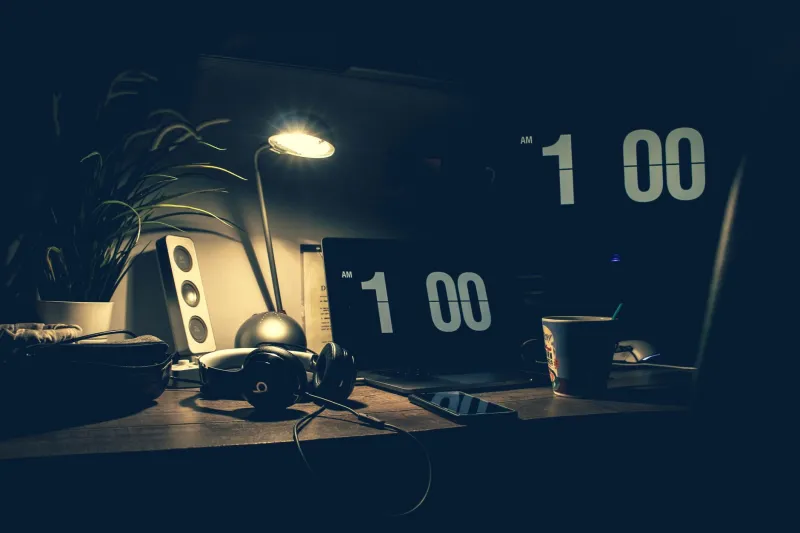
Somewhere between 1 and 4 a.m. Eastern, certain corners of the internet come alive in a way they specifically don't during daylight hours. Not because the users are nocturnal by necessity, but because they've figured out something that most platform designers don't want you to realize: the algorithm sleeps, sort of, and in those gaps there's room to build something that doesn't get immediately optimized out of existence.
These communities are real. They're active. And they're almost impossible to find unless you already know where to look — which is, frequently, the whole point.
What Algorithmic Invisibility Actually Looks Like
The word "hidden" conjures something dramatic — encrypted forums, invite-only gates, the kind of access-controlled digital spaces that appear in tech thrillers. The reality is considerably stranger and more mundane. Most of these communities aren't hidden in any technical sense. They're just built to be boring to the systems that surface content.
Small subreddits with deliberately generic names and posting patterns that keep engagement metrics artificially low. Discord servers with membership requirements that aren't secret so much as oblique — you have to know the right question to ask to even realize the requirement exists. Forums with posting rules specifically designed to prevent the kind of viral moment that would bring in a flood of new users and, inevitably, algorithmic attention.
"Recommendation feeds are trained on engagement signals," explains one community moderator who agreed to talk about their Discord server's structure without revealing its name or subject matter. "If you never spike, you never get recommended. If you never get recommended, you stay the size you want to stay. It's not that complicated once you understand how the feed works."
This is a form of digital camouflage that operates by making a space look, to the machines watching, like it's dying when it's actually thriving.
The Temporal Architecture of Off-Peak Spaces
Some communities don't just avoid algorithmic attention — they actively structure themselves around the hours when platform moderation and recommendation systems are running at reduced capacity. This isn't paranoia. It's a practical adaptation.
US-based platform moderation tends to operate on roughly business-hours logic, even when it's technically 24/7. Automated systems handle the overnight load, but human review — and the kind of nuanced community management that can catch and crush an emerging culture before it develops its own norms — is lighter between midnight and 6 a.m. Eastern. Communities that know this can do things in those hours that would draw intervention during peak times.
Not necessarily anything rule-breaking. Often just conversations that would, in daylight, attract the wrong kind of attention. Political discussions too granular and specific to survive the flattening effect of mass participation. Creative projects too weird to survive contact with a general audience. Grief communities, recovery spaces, niche fandoms for things so obscure that any growth would fundamentally change what the space is.
The temporal structure isn't incidental. It's load-bearing.
Why People Build Spaces Designed to Stay Small
This is the part that cuts against the dominant logic of internet culture, which has spent twenty years telling us that growth is the point — more followers, more reach, more engagement, more scale. The communities operating in algorithmic blind spots are making a deliberate argument against that logic.
Talk to enough people who build and maintain these spaces and a consistent thread emerges: the thing that makes a community valuable is almost always incompatible with the thing that makes it discoverable. The intimacy, the shared context, the ability to have a conversation that assumes a certain baseline of trust and history — these things don't scale. They don't survive a Reddit front-page moment or a TikTok that goes sideways.
So the communities that care about those qualities build in the structural features that prevent scale. Low posting frequency. Obtuse naming. Membership processes that are frictionless for the right person and invisible to the wrong one. Off-peak activity patterns. An absence of the content types — hot takes, dramatic revelations, shareable moments — that trigger recommendation engines.
"We've had the same forty people for three years," said one moderator of a subreddit focused on a specific subgenre of independent film. "New people find us occasionally. Some of them stay. But we've never had a growth moment and we've never tried to. The second we get big, we become something else."
The Archaeology Problem
For anyone interested in digital culture, these communities present a specific challenge. They're designed to leave minimal traces. The conversations happening in them don't get archived in the ways that high-traffic content does. They don't generate the kind of engagement data that researchers use to study online behavior. They're, in a meaningful sense, invisible to the methodologies we use to understand how people interact online.
Which means there's an entire layer of digital social life — potentially a very large one — that we simply don't have good visibility into. The internet we can study is the internet that wanted to be seen. The internet that didn't want to be seen is, almost by definition, underrepresented in any account of what actually happens online.
These midnight communities are, in that sense, the digital equivalent of a conversation that happened before anyone thought to start recording. Real, consequential, and almost entirely lost to any official record.
What They Reveal About Everything Else
The existence of communities deliberately engineered to avoid algorithmic attention tells us something important about the communities that haven't made that choice. Every mainstream online space is, in some sense, shaped by the recommendation infrastructure it operates inside. The content gets optimized for the feed. The conversation gets structured around what survives moderation. The culture bends toward whatever the platform rewards.
The midnight communities are a control group. They're what online spaces look like when you take the platform optimization out of the equation. And if what they look like is stranger, slower, more specific, and harder to access — well. That might tell you something about what we've lost in the spaces that chose to be found.