It Knows You Better Than You Know Yourself, and That Should Scare You
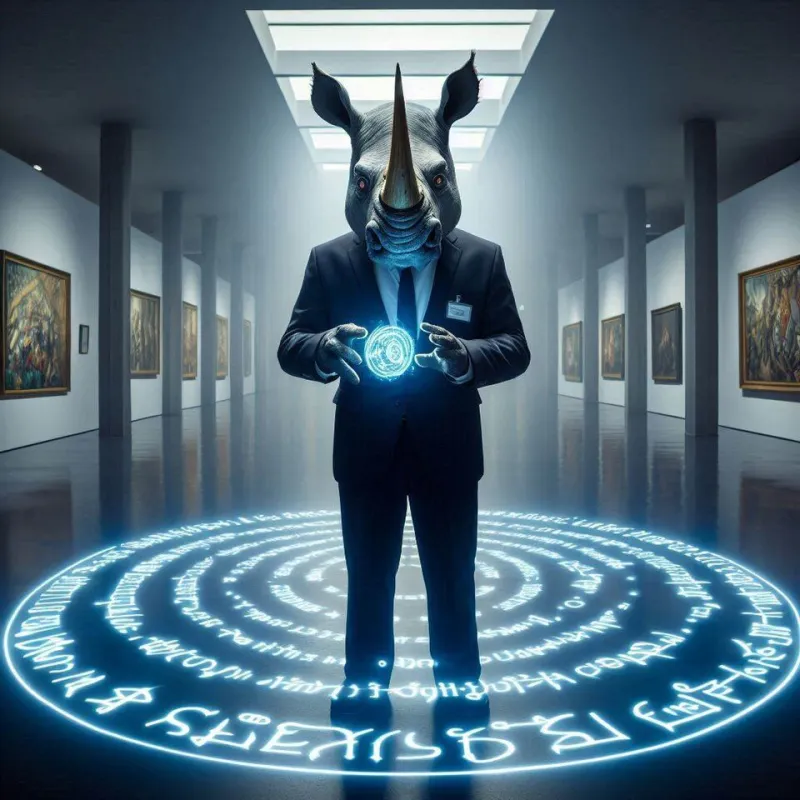
Photo: Bing Image Creator, Public domain, via Wikimedia Commons
There's a specific kind of dread that hits when your phone recommends something you were only thinking about. Not something you searched. Not something you clicked. Something that lived entirely inside your head until the algorithm apparently reached in and pulled it out for you. You laugh it off. You show your friend. You say this thing is creepy and then you keep scrolling, because what else are you going to do?
That moment—that brief, stomach-dropping recognition—is what some researchers are quietly calling the algorithmic uncanny valley. And the more precisely these systems get tuned, the deeper that valley gets.
The Uncanny Valley Has Gone Digital
The original uncanny valley was a robotics concept. The idea was simple: the closer a robot looks to a human without quite getting there, the more unsettling it becomes. Something about the near-miss triggers a deep, instinctual wrongness. We've all felt it looking at certain CGI characters or humanoid robots. The almost-right is worse than the clearly-fake.
Recommendation systems have hit their own version of this threshold. When Netflix suggested you might like a genre you'd never explored, that felt like a fun discovery. When Spotify served up a song that matched your exact mood on a Tuesday afternoon you hadn't described to anyone, that felt different. Useful shaded into eerie without anyone sending out a warning.
A former engineer who worked on content ranking systems at a major streaming platform—who asked to remain anonymous because they still work in the industry—described it this way: "The goal was always to minimize the gap between what users said they wanted and what they actually engaged with. We got very good at that. Maybe too good. There's a point where accuracy stops feeling like service and starts feeling like exposure."
Exposure. That word keeps coming up.
What the Data Actually Sees
Here's the thing about behavioral data that most people don't fully sit with: it doesn't record what you say. It records what you do. And those two things are often wildly different.
You tell your friends you've been reading more. The algorithm sees you doomscrolling until 2 a.m. You tell yourself you're doing fine. The algorithm notices you've been watching a lot of videos about anxiety management and financial stress. You think of yourself as a pretty private person. The algorithm has a detailed portrait of your loneliness, your insecurities, your fixations, and your patterns—assembled entirely from the ghost trail of your attention.
That portrait doesn't get shared with you directly. It just silently shapes what you see. And when the recommendations land with uncanny precision, you're essentially catching a glimpse of your own reflection in a mirror you didn't know existed.
Another former algorithm designer, who worked on social media feed ranking before leaving the industry in 2021, put it bluntly: "We weren't trying to surveil anyone. But surveillance was the byproduct of optimization. You can't personalize without profiling. Those are the same operation."
Why Accuracy Feels Worse Than Randomness
Here's the philosophical wrinkle that doesn't get enough airtime: people are more comfortable being misunderstood than perfectly understood.
A bad recommendation is easy to dismiss. A weirdly accurate one forces a moment of self-reckoning. If the machine knows you watched seventeen videos about a topic you've never mentioned to another human being, you have to acknowledge that you watched seventeen videos about that topic. The algorithm doesn't judge. It just reflects. And sometimes the reflection is the uncomfortable part.
Psychologists have a name for the discomfort of being seen too clearly—it touches on concepts around privacy, autonomy, and what researchers sometimes call the right to opacity. The idea that humans need some degree of internal obscurity, even from themselves, to function comfortably. Recommendation systems are eroding that obscurity from the outside in.
What's especially strange about this moment is that we opted into all of it. Every terms-of-service agreement, every app permission, every time you hit accept without reading—that was a transaction. You handed over the raw material. The algorithm just did the math.
The Signal in the Void
MPAEGM exists somewhere in the spaces between things—between signal and noise, between the content you find and the content that finds you. And what we keep noticing, from this particular vantage point, is that the recommendation layer of the internet has become its own kind of subtext. A running commentary on who you actually are, delivered without commentary, embedded in what gets served to you next.
The digital void isn't empty. It's full of inferences about you.
Some people respond to this by trying to game the algorithm—deliberately watching things they don't care about to muddy the data portrait. Others lean in, treating the recommendations as a kind of oracle. Most people just go numb to it, which might be the most revealing response of all.
Where the Line Is, and Whether It Still Exists
The honest answer is that nobody drew the line. There wasn't a meeting where engineers decided this is the point at which personalization becomes philosophically invasive. The systems were optimized toward engagement metrics, and engagement metrics rewarded accuracy, and accuracy eventually crossed into something that feels, on the receiving end, less like a helpful assistant and more like being watched by something that doesn't blink.
The former streaming engineer said something that stuck: "The system doesn't have intentions. It doesn't care about you. But it acts like it does, and that's the part that messes with people. The appearance of understanding without any actual understanding. That gap is where the dread lives."
That gap. That's the uncanny valley.
And until someone figures out how to talk honestly about it—not in privacy policy language, not in tech PR language, but in plain human terms—we're all just going to keep scrolling through our perfectly curated feeds, occasionally catching our own reflection, and scrolling a little faster to get past it.